Circularity in the Social Housing Sector – Reusefully Wins Innovate UK Project

Simon Guy • 4 February 2022

Reusefully is managing a consortium of partners who were successful in receiving R&D funding in the latest series of Innovate UK bids. The project aims to help the social housing sector realise better circularity outcomes across the value chain, by provision of data to enable better decision making.


This involves the quick and easy estimation of the products and materials embedded in existing built assets and their reuse potential.  Whilst there has been some attention to circularity in the construction sector, there has been little work undertaken with the social housing sector, with lack of data and related measurement tools is commonly referenced as a key challenge; even though there is a long term interest in their assets.


There has also been little work on how circularity can be integrated into asset management decision making, which is largely driven by operational energy and cost needs and upgrading to meet carbon emissions targets. Thus, there is a real need for Pre-Demolition Environmental Assessment and Decision Making (PreaDeM) support via a user-friendly platform.


Our consortium partners are:


  • Sustenic, the consultancy which provides support to housing and health professionals in their journey to deliver high quality and healthy buildings, whilst accelerating the drive to net zero carbon emissions.


  • Cambridge Sustainable Design (CSD), which provides targeted design and assessment services focused on energy, carbon and waste reduction including pre-demolition audits.


  • Salvo, the architectural salvage hub that promotes reuse of materials from demolition with the aim of reducing the quantity of salvageable materials that end up in landfill.
by Dora Banda & Theo Simondetti • 28 September 2026
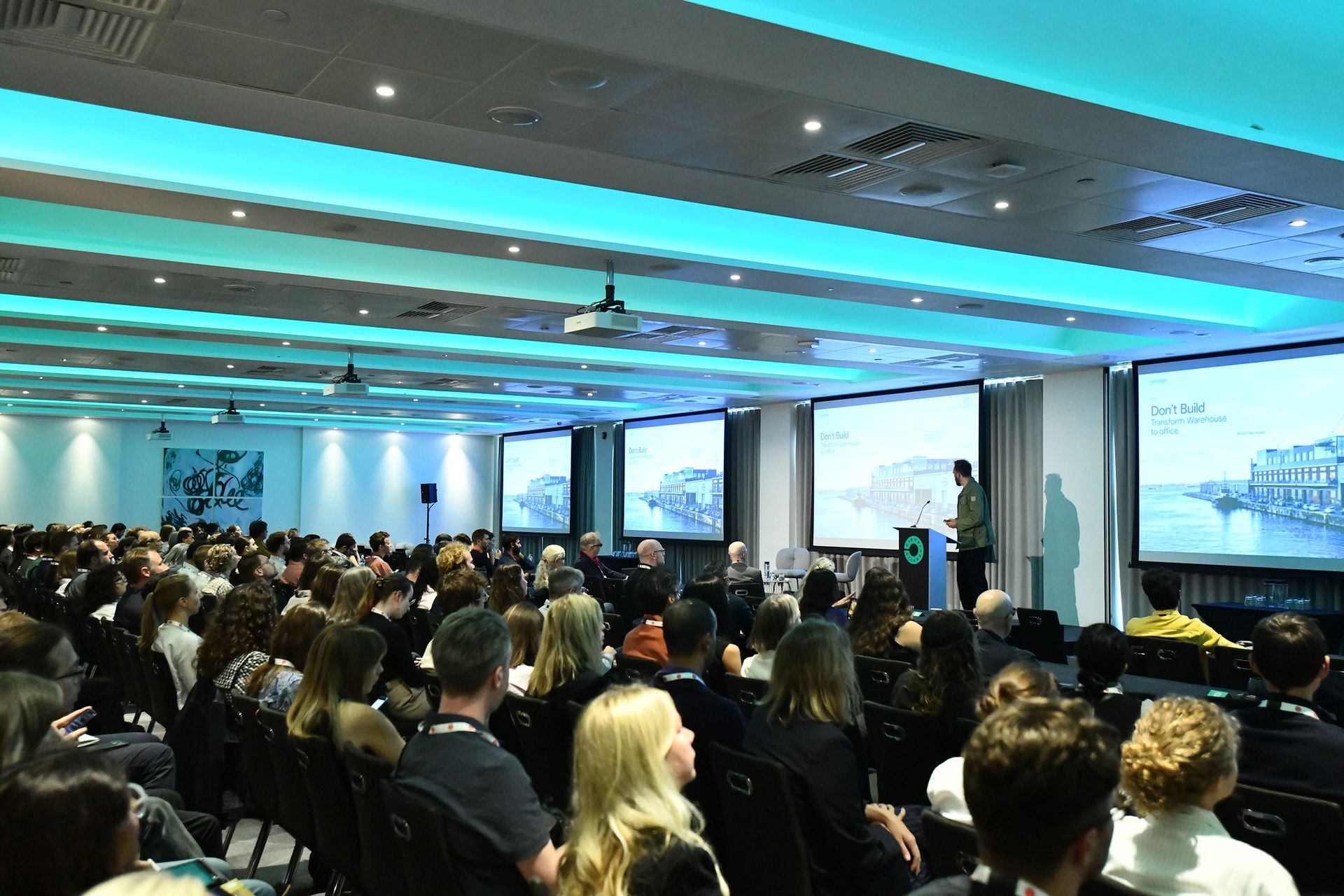
Earlier this month, Dora Banda and Theo Simondetti of Reusefully attended CircularBuild2026 in London, hosted by Architects' Journal. The conference brought together circular economy manufacturers, architects, developers, consultants and contractors to explore how adapting existing buildings can work alongside low-carbon material supply chains and emerging technologies. Here are their insights and key takeways from the event.
by Natalie Ibbott • 12 June 2026
Universities and further education providers have a significant opportunity to lead the transition to circularity and a net-zero future. As long-term owners and managers of complex estates, they make decisions that shape not only operational performance, but also material use, carbon impact and adaptability of buildings over many decades.
by Simon Guy • 13 May 2026
A new collaborative project funded under the York and North Yorkshire Combined Authority’s Carbon Negative Challenge Fund aims to drive reuse and materials sharing for the region by creating and promoting industrial symbiosis.
by Theo Simondetti • 20 April 2026
We are in the middle of a quiet revolution in how the design and construction industries think about materials. For decades, the story of a building or an office fit-out followed a familiar arc: specify new, install, and when the lease runs out or the brand refresh arrives, strip it all out and dispose of it. That model is no longer tenable — environmentally, economically, or ethically. Reusefully's Theo Simondetti explains how creative reuse is becoming a powerful tool available to designers.
by Simon Guy • 16 April 2026
The Scottish Government launched its Circular Economy Strategy towards the end of last month, with the built environment identified as one of five areas of priority.
by Simon Guy • 12 February 2026
How can planning policy influence and support the development of the circular economy in construction and what actions can municipalities take to support circularity and reuse? At the end of January, Reusefully hosted a webinar on this topic with contributions from more than 100 attendees who joined from across the UK, Denmark and beyond.
More posts