Reuse Now!

Harriet Couch • 20 December 2024

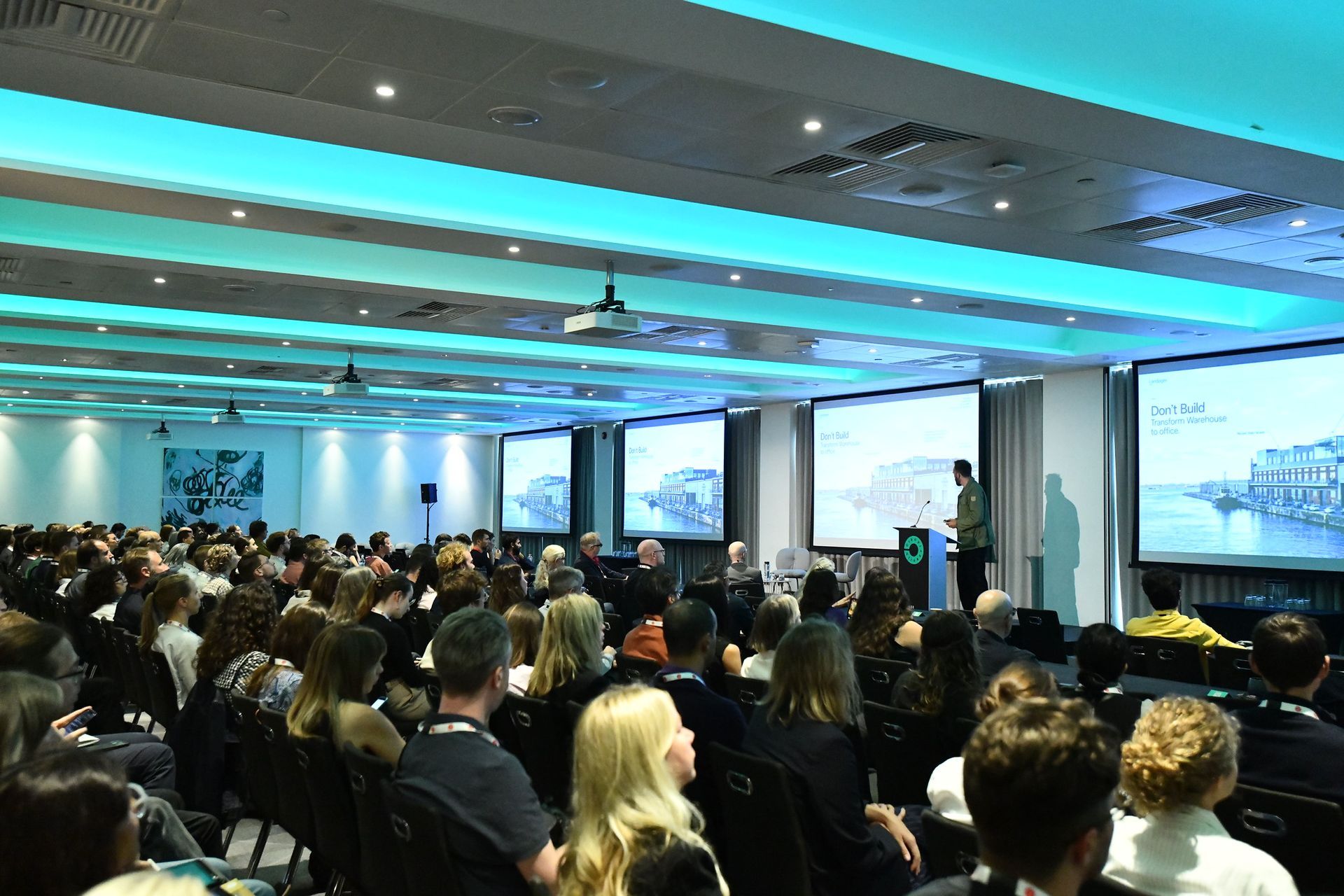
The Alliance for Sustainable Building Products (ASBP) held its second Reuse Summit at the Building Centre, London on 14th November. The Summit is part of ASBP’s targeted effort to champion circular economy through its Reuse Now campaign which is supported by Reusefully. This initiative promotes the reuse of construction materials and aims to enable uptake of reuse through collaboration and the creation of practical resources. Harriet Couch of Reusefully provides a summary of proceedings.

One year on for ASBPs last Reuse Summit, I was keen to find out what progress had been made. Highlights from this year’s event included Tina Paillet, President of RICS and co-founder of Circotrade, who kicked off proceedings highlighting the role professionals in the built environment have in enabling a circular economy revolution. She also highlighted the central role reuse of materials has in achieving overall decarbonisation. 


ASBP’s Katherine Adams and Debbie Ward gave an update on what ASBP have been doing since last year, including the practicalities of reusing interior glass partitions and DISRUPT II, the steel reuse project. Leandra Hope from Grosvenor showcased their work in reuse and the need for businesses such as Resource Xchange to provide storage solutions between strip-out and fit-out phases of developments. Tom Shillingshaw from Lazari Investments gave great insight into the practical challenges of the reuse of materials in their portfolio. He described the difficulties in reusing fire doors that would need

re-testing and re-certification. 


Roy Fishwick of Cleveland Steel and Tubes described how they have undertaken EPDs to provide granular detail of the carbon emissions for individual reused steel products. Howard Button, ex-CEO of NFDC and now a Reusefully Associate, showed images of how reuse was commonplace historically although health and safety measures have improved considerably! 


Stephen Dorer from Deconstruct UK presented a flagship project at 20 Giltspur Street. Steelwork from the original structure was reused in the extension, and the floors were ‘jacked’ (raised). This process, which took just three days, saved £2 million and 30 weeks on the programme which was really impressive. Debbie Ward from ASBP then went on to highlight the Rebuild Site in Wolverhampton, a community reuse initiative, and Darcy Arnold-Jones of Marks Barfield Architects the Circular Do Tank initiative. 


Flavie Lowres from the Finishes and Interiors Sector (FIS) closed the event, highlighting the reuse potential in the fit-out sector, which accounts for 11% of construction costs. With buildings undergoing around 30 fit-outs in their lifetime, and refurbishments every 5-7 years on average, the impact of reusing fit-out materials are huge. FIS are calling for donations of luminaries and metal ceiling tiles for their pilot reuse project. 


So how much progress had been made? The pace of change does seem to have increased year-on-year, witnessed by the rise of intelligent platforms to record inventories of buildings as materials banks which are surely a step in the right direction. 

However a number of challenges still remain which mean we need to redouble our efforts.  Issues such as how to include the cost of climate change in the full economic value of assets, and how to reduce the cost of reusing materials need further attention. 


Overall, the key facts from ASBP’s campaign speak for themselves. Every 10 minutes globally we will extract 50,000 tonnes of iron ore, 5 million bricks will be produced and the construction and demolition industry will create 38,000 tonnes of waste. In just one year the industry emits approximately 10 gigatonnes of CO2, the equivalent of around 30 million Boeing 747 jets, so there is still much to be done! 
by Simon Guy 13 May 2026
A new collaborative project funded under the York and North Yorkshire Combined Authority’s Carbon Negative Challenge Fund aims to drive reuse and materials sharing for the region by creating and promoting industrial symbiosis.
by Theo Simondetti 20 April 2026
We are in the middle of a quiet revolution in how the design and construction industries think about materials. For decades, the story of a building or an office fit-out followed a familiar arc: specify new, install, and when the lease runs out or the brand refresh arrives, strip it all out and dispose of it. That model is no longer tenable — environmentally, economically, or ethically. Reusefully's Theo Simondetti explains how creative reuse is becoming a powerful tool available to designers.
by Simon Guy 16 April 2026
The Scottish Government launched its Circular Economy Strategy towards the end of last month, with the built environment identified as one of five areas of priority.
by Simon Guy 12 February 2026
How can planning policy influence and support the development of the circular economy in construction and what actions can municipalities take to support circularity and reuse? At the end of January, Reusefully hosted a webinar on this topic with contributions from more than 100 attendees who joined from across the UK, Denmark and beyond.
by Gillian Hobbs 21 November 2025
As COP30 closes today in Brazil, most headlines have centred on forests and energy. But there’s another critical question we must ask "where will people live in a climate-safe future? Gilli Hobbs of Reusefully and Ana Quintas of Sustenuto reflect on affordable housing, sustainability and quality. Affordable housing isn’t only a social priority, it’s a climate imperative. Sustainable development can only succeed if construction, housing, and social impact move forward together. Around 11 years ago, whilst at BRE, we were invited to a pan government and industry workshop to discuss affordable housing and priorities to improve sustainability and quality in the next (highly ambitious) phases of the Minha Casa Minha Vida programme. There had already been around 3 million homes built over 7 years. An impressive feat that resulted in millions of Brazilians having formal housing for the first time. However, there were issues arising from these developments that needed to be resolved prior to the next wave of developments. In 2015, we launched a programme with Caixa Econômica Federal and UNDP to strengthen sustainability in Brazil’s social housing sector - Advancing the Sustainability of Social Housing Developments in Brazil. The goal was to raise environmental performance and building quality in Brazil’s Minha Casa Minha Vida programme, which has provided millions of homes for low-income families. These earlier housing developments offer important lessons, while future programmes present opportunities to embed higher sustainability standards from the start. To support this evolution, our team and partners developed a set of tools and methodologies: Sustainability Standard for Social Housing : A framework to support governance, tools, training, and guidance to programme managers and operators. Balanced Scorecard : A holistic evaluation approach covering infrastructure, services, and the social, economic, and environmental sustainability of communities. Post-Occupancy Evaluation : A robust methodology adapted to the Brazilian context, enabling consistent data collection on housing performance and resident experience. Impact Assessment : Although data gaps limited a full evaluation, we provided strategic guidance to strengthen future assessments. Dissemination Phase : Workshops with industry, associations, and residents, supported by CAIXA, UNDP, and the Ministry of Cities, ensured wide engagement and knowledge sharing. This work marked the beginning of a long-term journey: embedding sustainability not just in buildings, but in governance, urban planning, and community development. Watch this short video on how Brazil approached sustainable housing challenges a decade ago. Why this matters today Buildings account for nearly 40% of global energy-related emissions. Every affordable home built without sustainability locks in decades of inefficiency, higher costs, and increased climate risk for families who can least afford it. As COP30 ends, the real work begins. Climate justice isn’t only about forests and energy transitions . It’s also about homes—where people live, raise families, and build their futures. Sustainable development only succeeds when housing, construction, climate resilience, and social impact move hand in hand. COP30 reminds us of a simple truth: climate justice starts at home. What did we learn? Our project was quite intense, involving many stakeholders from across Brazil. The level of collaboration and determination to provide more sustainable and resilient homes for the poorest segment of society was very impressive – for which it won an award as you can see below.
by Simon Guy 13 November 2025
45 Waterloo Street is a 95,500 sq ft office building acquired by RoundShield and CEG Group earlier this year which is currently undergoing refurbishment by the new owners. This includes a full internal refurbishment, refreshed external elevations, a new external roof terrace and removal of the large, glazed atrium to the rear of the building. The building is situated in Glasgow’s busy financial services district.
More posts