Call for Social Housing Sector to Help Improve Circularity and Reduce Carbon

Simon Guy • 12 April 2022

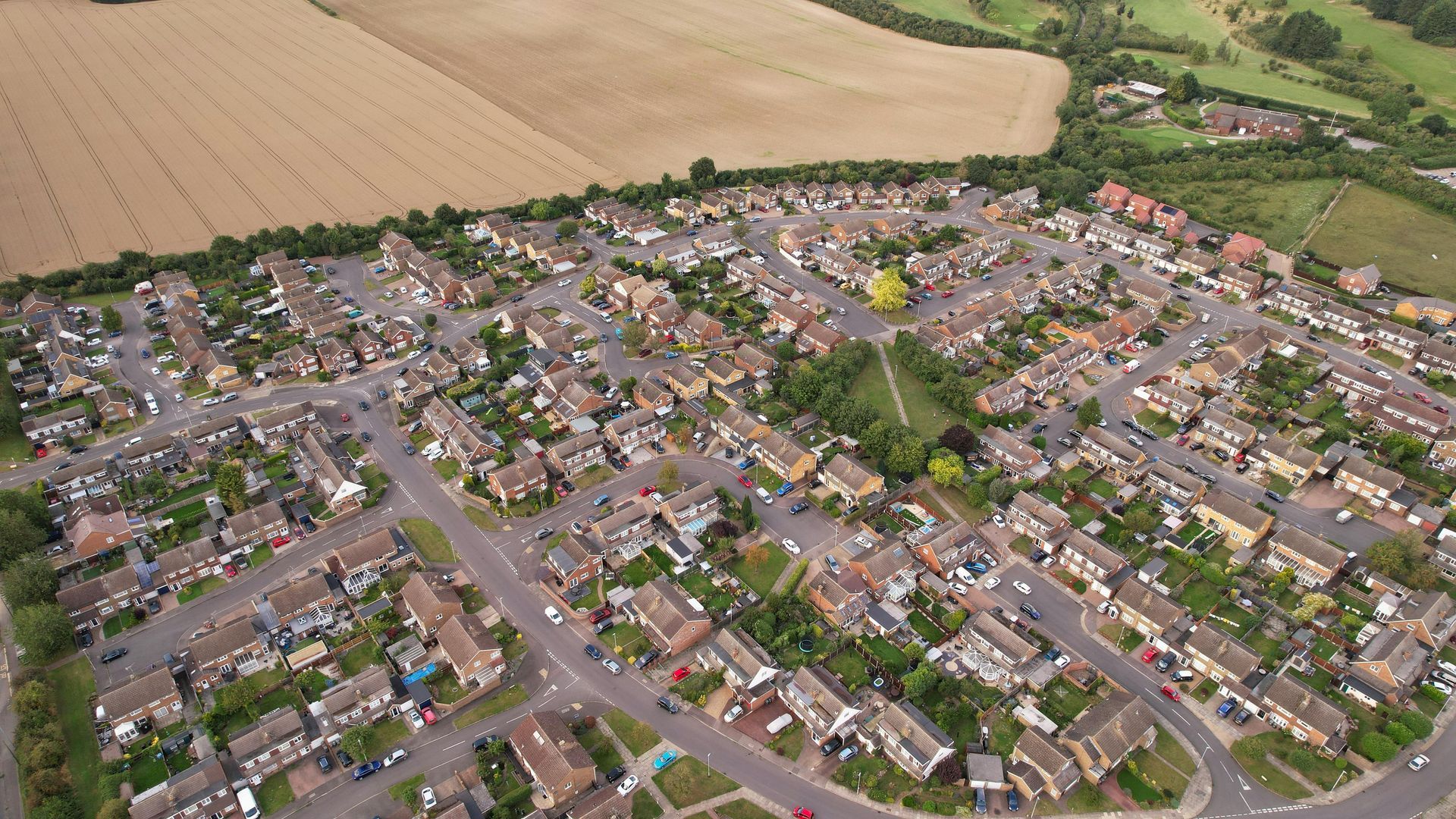
The social housing sector is being invited to contribute to a project that aims to improve circularity and reduce carbon in the refurbishment of the UK’s housing stock.


PreaDeM (Pre-demolition environmental assessment and Decision-Making) is a one year research and development project supported by Innovate UK and led by circular economy consultancy Reusefully, working with partners Sustenic, Cambridge Sustainable Design and Salvo.


It aims to help the social housing sector realise better circularity outcomes across the value chain.  


The project will undertake a feasibility study to determine how to best measure the type and amount of materials, products and elements in UK housing types and how they can best be reused, or, if necessary, recycled at the end of their life. Currently this is undertaken through pre-refurbishment and pre-demolition audits, which can be time consuming and can often be ineffective in reducing carbon impact.


By developing an ‘automated bill of quantities’, better decisions can be made about the future of housing assets. This includes whether assets should be refurbished or demolished and the impact this will have in terms of the materials arising and the carbon impact of this balanced with operational energy savings.


The project partners are looking for expressions of interest from housing asset owners and managers, and all those involved in the delivery of housing stock refurbishment programmes.


They wish to canvass views on circular economy outcomes, and work with the sector to develop case studies of best practice. They also wish to look at the wider ecosystem of existing tools and legislation that could be corralled to achieve better outcomes.


There is more information on the project here and interested parties can register their interest by sending us a message using the CONTACT information above.


Notes for Editors


1.    The PreaDeM project is part-funded under Innovate UK, which is part of UK Research and Innovation, and investing up to £1 million in circular economy innovation projects through the UKRI National Interdisciplinary Circular Economy Research programme (NICER). The aim of NICER funding is to support feasibility studies, industrial research and experimental development that address the challenges of transitioning to a circular economy.


2.    PreaDeM is led by Reusefully Ltd, a circular economy research and consultancy organisation that specialises in the construction industry. Reusefully is working alongside partners Sustenic, an organisation focused on supporting housing and health professionals in the drive to net zero carbon, Cambridge Sustainable Design, who provide energy, carbon and waste reduction services, and Salvo, the architectural salvage hub that promotes reuse of materials from demolition with the aim of reducing the quantity of salvageable materials that end up in landfill. 
by Simon Guy 13 May 2026
A new collaborative project funded under the York and North Yorkshire Combined Authority’s Carbon Negative Challenge Fund aims to drive reuse and materials sharing for the region by creating and promoting industrial symbiosis.
by Theo Simondetti 20 April 2026
We are in the middle of a quiet revolution in how the design and construction industries think about materials. For decades, the story of a building or an office fit-out followed a familiar arc: specify new, install, and when the lease runs out or the brand refresh arrives, strip it all out and dispose of it. That model is no longer tenable — environmentally, economically, or ethically. Reusefully's Theo Simondetti explains how creative reuse is becoming a powerful tool available to designers.
by Simon Guy 16 April 2026
The Scottish Government launched its Circular Economy Strategy towards the end of last month, with the built environment identified as one of five areas of priority.
by Simon Guy 12 February 2026
How can planning policy influence and support the development of the circular economy in construction and what actions can municipalities take to support circularity and reuse? At the end of January, Reusefully hosted a webinar on this topic with contributions from more than 100 attendees who joined from across the UK, Denmark and beyond.
by Gillian Hobbs 21 November 2025
As COP30 closes today in Brazil, most headlines have centred on forests and energy. But there’s another critical question we must ask "where will people live in a climate-safe future? Gilli Hobbs of Reusefully and Ana Quintas of Sustenuto reflect on affordable housing, sustainability and quality. Affordable housing isn’t only a social priority, it’s a climate imperative. Sustainable development can only succeed if construction, housing, and social impact move forward together. Around 11 years ago, whilst at BRE, we were invited to a pan government and industry workshop to discuss affordable housing and priorities to improve sustainability and quality in the next (highly ambitious) phases of the Minha Casa Minha Vida programme. There had already been around 3 million homes built over 7 years. An impressive feat that resulted in millions of Brazilians having formal housing for the first time. However, there were issues arising from these developments that needed to be resolved prior to the next wave of developments. In 2015, we launched a programme with Caixa Econômica Federal and UNDP to strengthen sustainability in Brazil’s social housing sector - Advancing the Sustainability of Social Housing Developments in Brazil. The goal was to raise environmental performance and building quality in Brazil’s Minha Casa Minha Vida programme, which has provided millions of homes for low-income families. These earlier housing developments offer important lessons, while future programmes present opportunities to embed higher sustainability standards from the start. To support this evolution, our team and partners developed a set of tools and methodologies: Sustainability Standard for Social Housing : A framework to support governance, tools, training, and guidance to programme managers and operators. Balanced Scorecard : A holistic evaluation approach covering infrastructure, services, and the social, economic, and environmental sustainability of communities. Post-Occupancy Evaluation : A robust methodology adapted to the Brazilian context, enabling consistent data collection on housing performance and resident experience. Impact Assessment : Although data gaps limited a full evaluation, we provided strategic guidance to strengthen future assessments. Dissemination Phase : Workshops with industry, associations, and residents, supported by CAIXA, UNDP, and the Ministry of Cities, ensured wide engagement and knowledge sharing. This work marked the beginning of a long-term journey: embedding sustainability not just in buildings, but in governance, urban planning, and community development. Watch this short video on how Brazil approached sustainable housing challenges a decade ago. Why this matters today Buildings account for nearly 40% of global energy-related emissions. Every affordable home built without sustainability locks in decades of inefficiency, higher costs, and increased climate risk for families who can least afford it. As COP30 ends, the real work begins. Climate justice isn’t only about forests and energy transitions . It’s also about homes—where people live, raise families, and build their futures. Sustainable development only succeeds when housing, construction, climate resilience, and social impact move hand in hand. COP30 reminds us of a simple truth: climate justice starts at home. What did we learn? Our project was quite intense, involving many stakeholders from across Brazil. The level of collaboration and determination to provide more sustainable and resilient homes for the poorest segment of society was very impressive – for which it won an award as you can see below.
by Simon Guy 13 November 2025
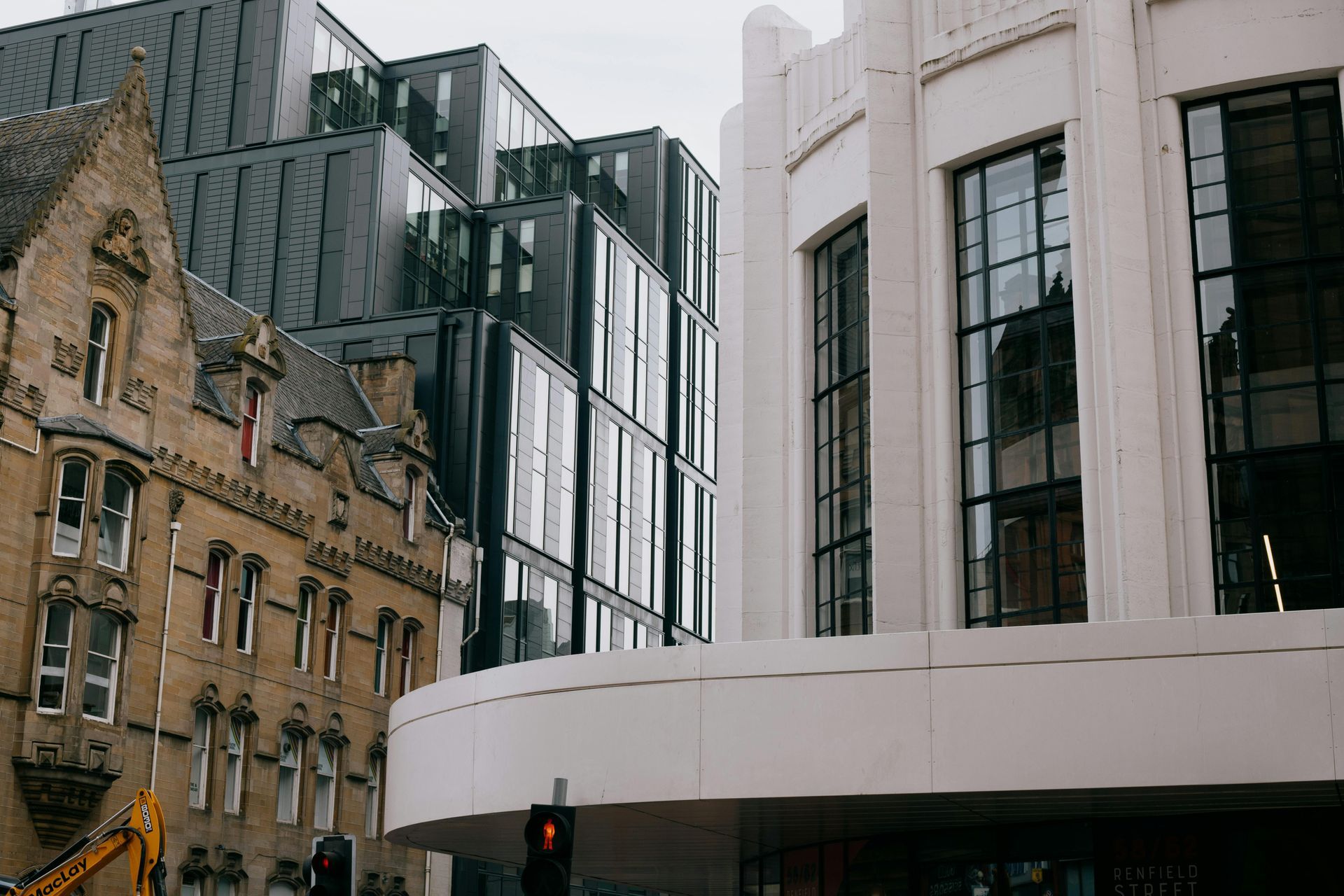
45 Waterloo Street is a 95,500 sq ft office building acquired by RoundShield and CEG Group earlier this year which is currently undergoing refurbishment by the new owners. This includes a full internal refurbishment, refreshed external elevations, a new external roof terrace and removal of the large, glazed atrium to the rear of the building. The building is situated in Glasgow’s busy financial services district.
More posts